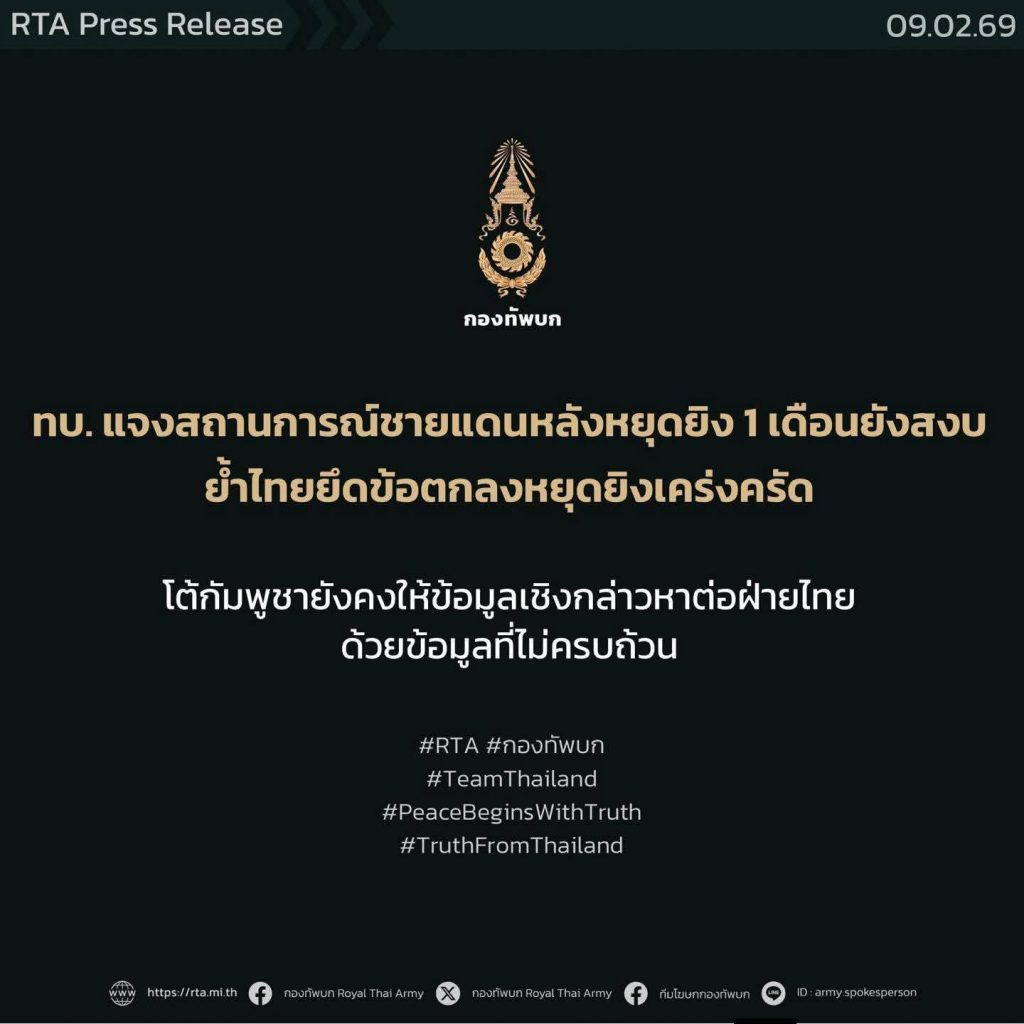
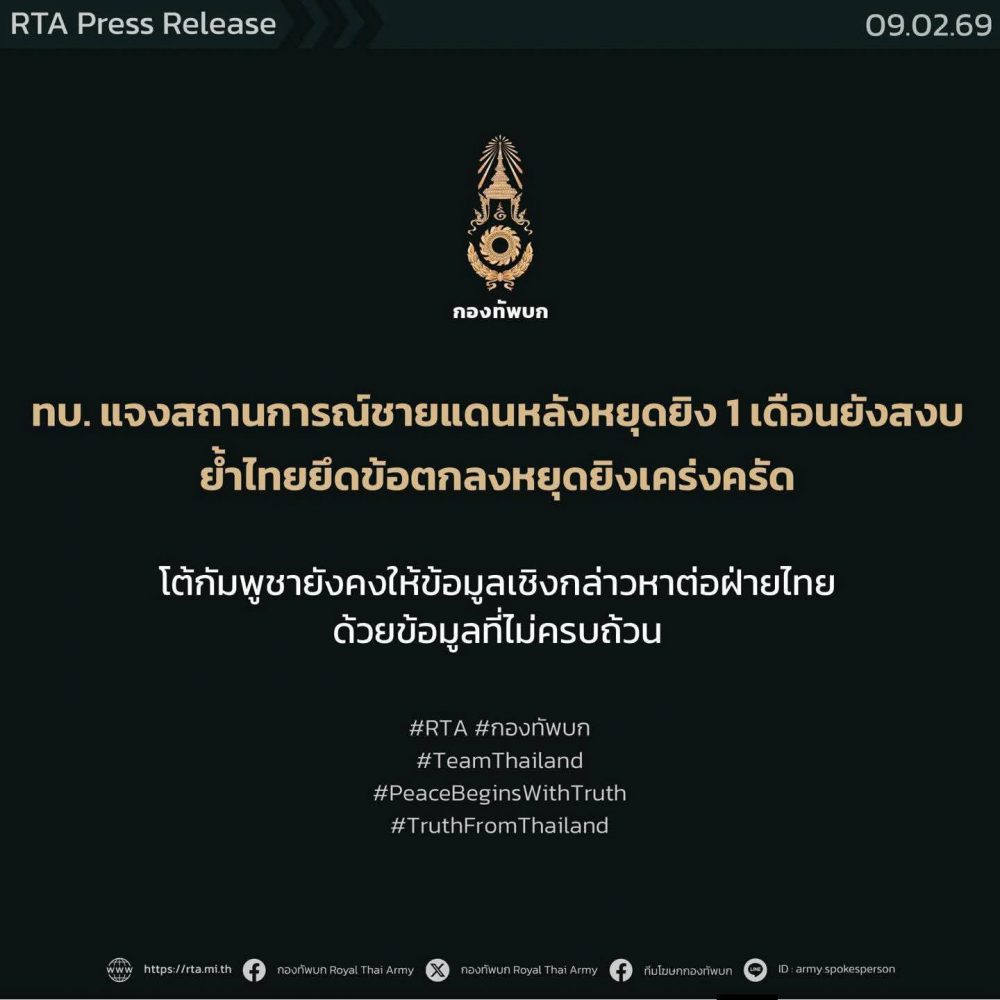

วานนี้ 9 กุมภาพันธ์ 2569 ที่กองบัญชาการกองทัพบก พลตรี วินธัย สุวารี โฆษกกองทัพบก กล่าวถึงสถานการณ์ในพื้นที่ชายแดนไทย–กัมพูชา หลังจากที่มีข้อตกลงหยุดยิง ตามผลการประชุมคณะกรรมาธิการชายแดนทั่วไป (General Border Committee : GBC) ไทย–กัมพูชา สมัยพิเศษ เมื่อวันที่ 27 ธันวาคม 2568 ซึ่งปัจจุบันทั้งสองฝ่ายได้ดำเนินการตามข้อตกลงมาเป็นเวลากว่า 1 เดือนแล้วว่า
“ตั้งแต่เริ่มข้อตกลงหยุดยิง ฝ่ายไทยได้ปฏิบัติตามแถลงการณ์ร่วมอย่างเคร่งครัด โดยเฉพาะมาตรการลดความตึงเครียด ด้วยการหยุดยิงในทันที และการคงกำลังทหารอยู่ในพื้นที่ปัจจุบันโดยไม่มีการเคลื่อนย้ายกำลังที่ตั้งอยู่เพิ่มเติม ตามแถลงการณ์ร่วม (Joint Statement) ในข้อ 2 รวมถึงสร้างสภาพแวดล้อมในพื้นที่ชายแดนให้มีความปลอดภัย ทั้งในการดำเนินการเร่งเก็บกู้ทุ่นระเบิดตกค้าง การซ่อมปรับปรุงเส้นทาง และสถานที่ที่ได้รับความเสียหายจากการถูกโจมตี
นอกจากนี้ ในส่วนของพื้นที่ที่พบว่ามีการใช้เป็นที่ปฏิบัติการทางทหาร และใช้ดำเนินการเกี่ยวกับไซเบอร์สแกม ได้มีการประสานเจ้าหน้าที่ตำรวจและส่วนที่เกี่ยวข้อง เข้าดำเนินการรวบรวมหลักฐานเพื่อขยายผลในการปราบปรามขบวนการผิดกฎหมายต่อไป ทั้งนี้เป็นไปตามแถลงการณ์ร่วม (Joint Statement) ข้อที่ 10 ซึ่งเน้นความร่วมมือในการป้องกันและปราบปรามอาชญากรรมข้ามชาติ อันจะเกิดผลดีกับชาวไทยและชาวต่างชาติที่ตกเป็นเหยื่อของกลุ่มขบวนการดังกล่าว”
โฆษกกองทัพบก กล่าวเพิ่มเติมว่า อย่างไรก็ตามสถานการณ์ในเวลานี้ยังคงมีข้อกังวล เนื่องจากฝ่ายกัมพูชายังคงมีความเข้าใจผิด และมักนำเสนอข้อมูลทำให้สังคมเข้าใจผิดอยู่ฝ่ายเดียว โดยเฉพาะที่ระบุว่าฝ่ายไทยได้เข้ายึดครองพื้นที่ต่าง ๆ ของฝ่ายกัมพูชา รวมทั้งนำตู้คอนเทนเนอร์มาปิดกั้นเส้นทาง ส่งผลต่อการเดินทางกลับที่อยู่อาศัยของชาวกัมพูชา ซึ่งถือว่าเป็นการกล่าวหาฝ่ายเดียว เอาเฉพาะเรื่องปลายเหตุที่เกิดขึ้นเฉพาะห้วงปัจจุบันมาชี้แจงแบบไม่ครบถ้วน โดยไม่กล่าวถึงพฤติกรรมที่ไม่เหมาะสมในอดีตของกัมพูชา ที่มักสนับสนุนให้ทั้งทหารและประชาชนกัมพูชามาทำการรุกล้ำพื้นที่อธิปไตยไทยหลายพื้นที่ตลอดแนวชายแดน
นับเป็นปัญหาที่สะสมมาอย่างยาวนาน ซึ่งฝ่ายไทยไม่เห็นด้วย นำไปสู่การเจรจาพูดคุยและทำการประท้วงตามแนวทางสันติวิธีมาโดยตลอด แต่กัมพูชาเพิกเฉยและไม่เคยมีการแก้ไข จนมาในปัจจุบันจากการที่กัมพูชาได้มีการใช้อาวุธและปฏิบัติการทางทหารต่อฝ่ายไทยในหลายพื้นที่ ทำให้ฝ่ายไทยจำเป็นต้องตัดสินใจใช้อาวุธตอบโต้ไปตามความเหมาะสมในกรอบกฎหมายสากล ตามหลักในการป้องกันตนเอง จึงใช้โอกาสนี้ในการจัดระเบียบพื้นที่ให้เป็นไปตามสิ่งที่ควรจะเป็น ภายใต้กรอบกฎหมายไทยและกฎหมายสากล
ขอยืนยันว่า พื้นที่ที่ฝ่ายไทยได้ควบคุมเฝ้าระวังอยู่ในปัจจุบัน ล้วนอยู่ภายใต้กรอบข้อตกลงตามข้อแถลงร่วมในข้อ 2 ทั้งสิ้น ดังนั้นการดำเนินการปรับปรุงพื้นที่เพื่อความปลอดภัยของฝ่ายไทยในช่วงนี้ย่อมสามารถกระทำได้ และมิได้มีการกระทำผิดในข้อตกลงแต่อย่างใด ที่สำคัญทุกพื้นที่ที่ฝ่ายไทยควบคุมเฝ้าระวังอยู่ในปัจจุบันนั้น ล้วนเคยเป็นที่ตั้งทางทหารของฝ่ายกัมพูชาที่ใช้ในการโจมตีคุกคามกำลังทหารและประชาชน ส่งผลกระทบต่อฝ่ายไทย
สำหรับความพยายามบิดเบือนเกี่ยวกับการใช้อาวุธต่อโบราณสถานต่าง ๆ อาทิ ปราสาทพระวิหาร ปราสาทตาควาย ปราสาทคนา เป็นเพราะกัมพูชาใช้โบราณสถานเหล่านั้นเป็นที่ตั้งปฏิบัติการทางทหาร มีหลักฐานข้อพิสูจน์ชัดเจน จึงทำให้พื้นที่เหล่านั้นไม่ได้รับสิทธิ์ในการคุ้มครองจากการใช้อาวุธ และฝ่ายกัมพูชาจะต้องออกมาแสดงความรับผิดชอบต่อเรื่องนี้ เพราะกัมพูชาเป็นผู้ที่ฝ่าฝืนกติกาสากลชัดเจน
อีกทั้งพบว่ากัมพูชามีแผนที่จะนำคณะสื่อมวลชนและผู้สังเกตการณ์จากต่างประเทศไปลงพื้นที่บริเวณแนวชายแดนไทย-กัมพูชาอยู่บ่อยครั้ง จึงขอเรียนว่า หากกัมพูชาจะให้ข้อมูลใด ๆ เกี่ยวกับสถานการณ์ที่เกิดขึ้น ขอให้มีความครบถ้วนและตรงไปตรงมา
สำหรับข้อกังวลของฝ่ายกัมพูชาในเรื่องเขตแดนนั้น ตามแถลงการณ์ร่วม (Joint Statement) ได้กำหนดไว้อย่างชัดเจนว่า ข้อตกลงในแถลงการณ์ร่วมไม่ส่งผลกระทบต่อการสำรวจและจัดทำหลักเขตแดนระหว่างสองประเทศ ที่ทั้งสองฝ่ายต้องดำเนินการผ่านกลไกคณะกรรมาธิการเขตแดนร่วม (Joint Boundary Commission : JBC) ไทย–กัมพูชา ต่อไปในอนาคต ซึ่งก่อนจะมีการหารือผ่านกลไก JBC นั้น ฝ่ายความมั่นคงต้องมีการประเมินสถานการณ์ความตึงเครียดในพื้นที่ว่าได้ลดระดับลงจนถึงระดับที่น่าไว้วางใจหรือไม่ และต้องมั่นใจได้ว่าพื้นที่ตามแนวชายแดนมีความปลอดภัยจากทุ่นระเบิดอย่างสมบูรณ์
……………………………..
ศูนย์ประชาสัมพันธ์กองทัพบก โดยทีมโฆษกกองทัพบก, 9 กุมภาพันธ์ 2569
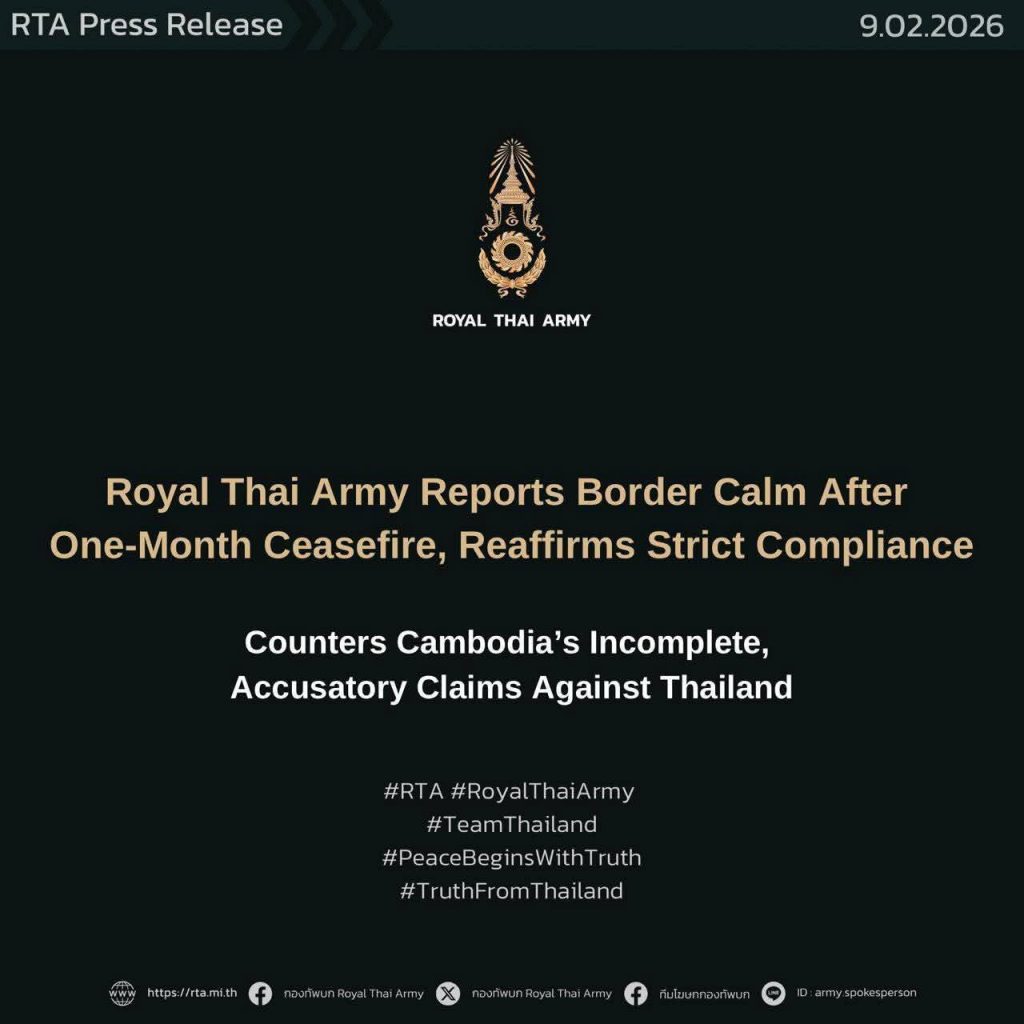
Royal Thai Army Reports Border Calm After One-Month Ceasefire, Reaffirms Strict Compliance — Rejects Cambodia’s Incomplete Accusatory Claims
Yesterday, 9 February 2026 — at the Royal Thai Army Headquarters, Major General Winthai Suvaree, Army Spokesperson, addressed the situation along the Thai–Cambodian border following the ceasefire agreement reached during the Special Session of the General Border Committee (GBC) between Thailand and Cambodia on 27 December 2025. Both sides have now implemented the agreement for more than one month.
“Since the ceasefire agreement began, Thailand has strictly complied with the Joint Statement, particularly measures to reduce tensions. This includes the immediate cessation of hostilities and maintaining current troop positions without additional deployments, in accordance with Article 2 of the Joint Statement. Efforts have also been made to ensure safety along the border, including the urgent clearance of unexploded landmines, repair of damaged routes, and restoration of facilities affected by attacks.”
The Army spokesperson further noted that concerns remain regarding the current situation, as Cambodia continues to misunderstand and present misleading information unilaterally. In particular, Cambodia has alleged that Thai forces have occupied Cambodian territory and blocked routes with shipping containers, preventing Cambodian citizens from returning to their homes. These accusations are incomplete, focusing only on recent developments while ignoring Cambodia’s past inappropriate actions, including repeated encouragement of Cambodian military personnel and civilians to intrude into Thai sovereign territory along the border. This has been a longstanding issue. Thailand has consistently opposed such actions and pursued peaceful means through dialogue and protest. However, Cambodia has ignored these efforts and failed to resolve the matter. Recently, Cambodia escalated the situation by employing weapons and military operations against Thailand in several areas. Consequently, Thailand was compelled to respond with appropriate defensive measures in accordance with international law and the principle of self-defense. These actions also serve to restore order in the affected areas under both Thai and international legal frameworks.
The spokesperson reaffirmed that all areas currently under Thai control and surveillance fall strictly within the framework of the Joint Statement, Article 2. Therefore, Thailand’s ongoing efforts to improve security in these areas are legitimate and do not violate any agreements. Importantly, the areas under Thai supervision were previously used by Cambodian forces to launch attacks against Thai military personnel and civilians, causing significant harm.
Regarding allegations of weapon use against ancient monuments such as Preah Vihear Temple, Ta Kwai Temple, and Kna Temple, the spokesperson clarified that Cambodia had used these sites for military operations. Clear evidence supports this claim, meaning such sites are not entitled to protection from military engagement. Cambodia must take responsibility for violating international norms in this regard.
It has also been observed that Cambodia frequently arranges visits by foreign media and observers to the Thai-Cambodian border. The spokesperson urged that any information Cambodia provides about the situation must be complete and accurate.
On the matter of border demarcation, the Joint Statement clearly stipulates that its provisions do not affect the ongoing survey and boundary marker placement between the two countries, which must proceed through the Joint Boundary Commission (JBC). Before discussions under the JBC framework can take place, security authorities must assess whether tensions have sufficiently eased and ensure that border areas are completely free of landmines.